Staying centrally near the Grand Canyon means trading convenience for availability - the options closest to the South Rim fill up fast, especially from April through October. Whether you're basing yourself in Tusayan for direct park access, in Flagstaff for a wider range of services, or in Kanab for the quieter Utah-side approach, each location comes with a distinct logistical trade-off worth understanding before booking.
What It's Like Staying Near the Grand Canyon
The Grand Canyon region is not a single destination - it's a corridor of small gateway towns serving one of the most visited national parks in the United States, drawing around 6 million visitors per year. The South Rim is open year-round, but the surrounding towns like Tusayan, Flagstaff, and Kanab operate on very different rhythms, from packed shuttle queues in summer to near-empty roads in January. Most travelers who stay in Tusayan can walk or take a free shuttle directly into the park, while those based in Flagstaff deal with an 80-mile drive but gain access to airports, restaurants, and more lodging variety.
Visitors without a car should pay close attention to shuttle access and proximity to the park entrance, as rideshare coverage outside Tusayan is extremely limited. This is a destination that heavily rewards pre-planning, especially during peak summer months when park entry queues and accommodation demand peak simultaneously.
Pros:
Tusayan accommodations offer direct access to the South Rim entrance, reducing daily park commute to under 10 minutes by shuttle
Flagstaff provides a real-city base with airport connections, dining variety, and attractions like Lowell Observatory as a buffer for non-canyon days
Kanab is an underrated base for visitors also planning to visit Zion, Bryce Canyon, or Antelope Canyon in the same trip
Cons:
Tusayan has almost no walkable infrastructure beyond the park - dining, grocery, and entertainment options are extremely limited
Peak-season room rates in the canyon corridor can spike sharply with little price competition between properties
Flagstaff's distance from the South Rim makes spontaneous half-day canyon visits logistically difficult without an early start
Why Choose a Centrally Located Hotel Near the Grand Canyon
Central hotels near the Grand Canyon are defined by their proximity to park entrances, shuttle stops, and visitor services - not by square footage or luxury finishes. In Tusayan, properties are positioned within around 3 km of the South Rim entrance, which is the primary reason travelers pay a premium here despite the limited surrounding infrastructure. Room sizes in this corridor tend to be functional rather than spacious, with most mid-range options offering standard motel-style layouts designed for guests who spend the majority of their day inside the park. In contrast, central hotels in Flagstaff deliver more room variety - including kitchen-equipped units - at lower nightly rates, though the time cost of the daily drive to the canyon is real.
The key trade-off for central canyon hotels is access versus amenity depth. Properties in Tusayan keep you within the park ecosystem but offer little beyond basic facilities, while Flagstaff-based hotels offer significantly more infrastructure - from airport connections to university-district walkability - at the cost of canyon proximity. Travelers prioritizing sunrise hikes on Bright Angel Trail or early entry before crowds should strongly consider Tusayan over Flagstaff.
Pros:
Tusayan hotels provide walking or shuttle access to the South Rim, eliminating park traffic stress on peak-season mornings
Flagstaff central hotels often include kitchenettes, which reduce meal costs significantly on multi-night stays
Kanab-area properties give access to multiple canyon-system parks without repositioning accommodation mid-trip
Cons:
Tusayan properties offer almost no cancellation flexibility during summer - most operate on strict policies due to high demand
Central hotels near the canyon rarely include resort-style amenities; pools, spas, and restaurants are exceptions, not standards
Availability in the 1-km zone around the South Rim entrance drops dramatically without around 6 weeks advance booking in high season
Practical Booking & Area Strategy for the Grand Canyon
The strategic choice between Tusayan, Flagstaff, and Kanab depends almost entirely on your itinerary priorities. Tusayan sits immediately south of the park's South Entrance and is the only town within a few kilometers of the canyon rim, making it the strongest base for hikers planning early descents on Bright Angel or South Kaibab Trail. Flagstaff, about 130 km southeast, serves travelers who want a proper city base - with Flagstaff Pulliam Airport, Northern Arizona University's cultural energy, and access to attractions like Lowell Observatory and Coconino National Forest. Kanab, positioned in southern Utah, is a tactical choice for road-trippers combining Grand Canyon with Zion National Park or Lake Powell, as Page Municipal Airport is around 120 km away and the town itself is far less crowded than Tusayan in summer.
Inside the park, the most visited viewpoints on the South Rim - Mather Point, Yavapai Point, and Desert View - are all accessible by free shuttle during peak season, reducing the pressure to drive within the park itself. Book Tusayan hotels at least 2 months ahead for any dates between May and September; same applies to in-park lodges managed by the National Park Service, which often fill a year in advance. Night-time safety across all three gateway towns is generally not a concern, but lighting and cell coverage outside of Tusayan and Flagstaff drops sharply after dark.
Best Value Stays
These properties offer strong proximity advantages or multi-day value - particularly for travelers who want functional, well-connected bases without paying premium resort rates.
-
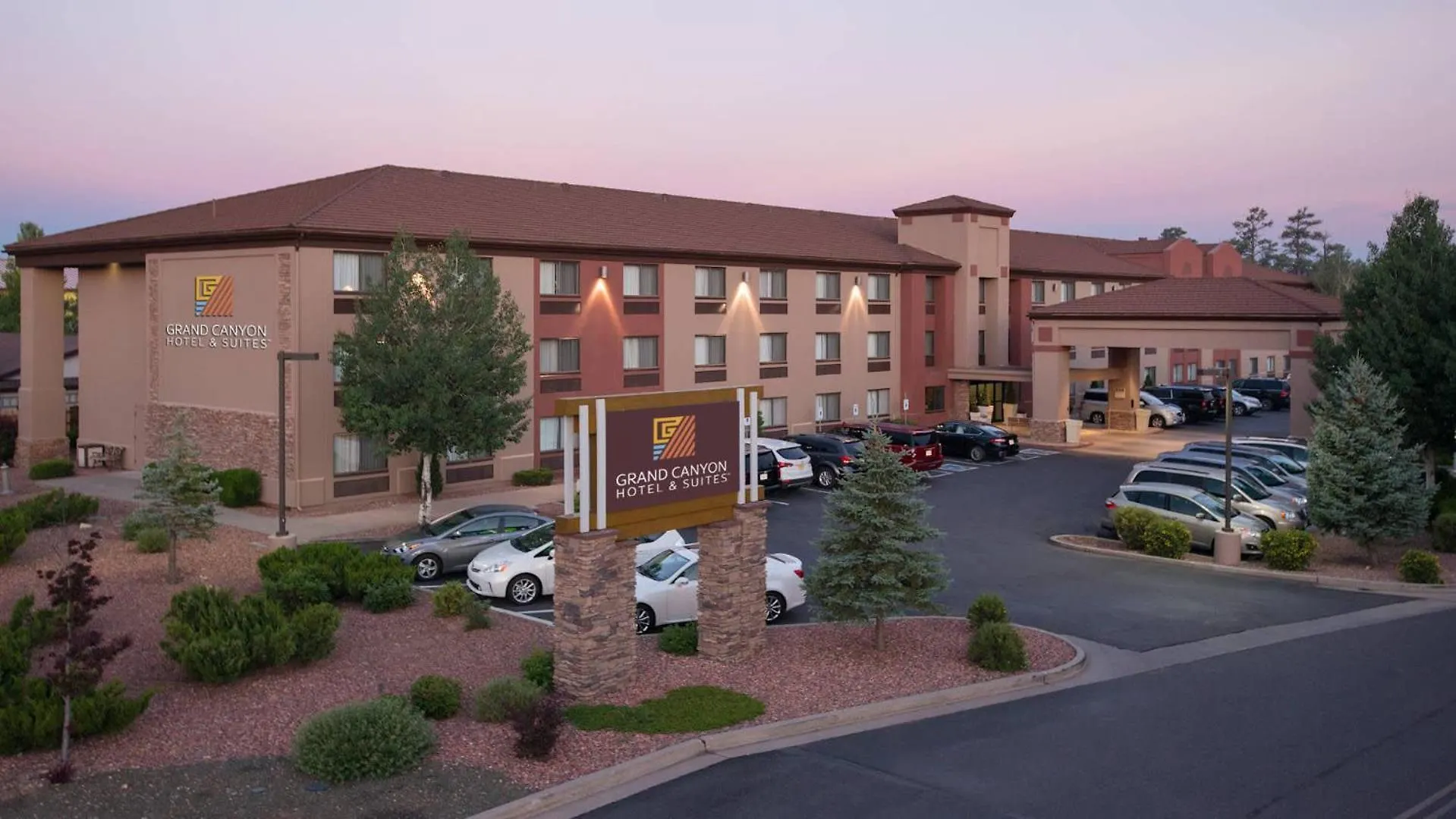
1. Grand Canyon Hotel & Suites
Show on map


 Check-infrom 16:00 until 23:59Check-outuntil 11:00
Just a few rooms left at the best rate!
fromUS$ 110
-
2. Quail Park Lodge
Show on map


 Check-infrom 15:00 until 23:59Check-outfrom 10:00 until 11:00
Just a few rooms left at the best rate!
fromUS$ 77
-
3. Bespoke Inn Flagstaff
Show on map


 Check-infrom 15:00 until 23:30Check-outfrom 05:00 until 11:00
Hurry – almost gone at this price!
fromUS$ 350
Best Premium Stay
For travelers wanting resort-style amenities in close proximity to the canyon, this property combines location with the widest on-site facility range in the Tusayan corridor.
-
4. Grand Canyon Plaza Hotel-South Rim
Show on map


 Check-infrom 15:00 until 23:59Check-outuntil 11:00
Rooms filling fast – secure the best rate!
fromUS$ 109
Best Time to Visit and How Long to Stay
The Grand Canyon South Rim sees its heaviest crowds between late May and early September, when daily visitor counts frequently exceed 20,000 people and shuttle queues at Mather Point and Bright Angel Trailhead can add significant waiting time to any planned activity. Late September through early November is widely considered the best trade-off period - crowds thin noticeably, temperatures on the rim drop to comfortable hiking levels, and nightly rates at Tusayan and Flagstaff properties ease by around 20% compared to peak summer. January and February offer the lowest prices and near-empty trails, but snowfall on the rim is common and some inner-canyon trails become icy and impassable without proper equipment.
Most visitors underestimate how much time the canyon actually demands - a single serious hike (even a partial descent to Plateau Point and back) takes a full day, and a minimum of two nights near the South Rim is needed to experience the canyon at different light conditions, including sunrise and sunset from the rim viewpoints. For Flagstaff-based travelers, allocate at least one full day purely for the drive, park entry, and a single viewpoint or trail - the 130 km distance is manageable but leaves little time for spontaneous detours. Booking flexibility is nearly nonexistent in July and August at Tusayan properties; confirmed reservations made at least 6 weeks ahead are not optional for those dates.